Food Delivery Platforms in East Asia 2026
What's inside this report
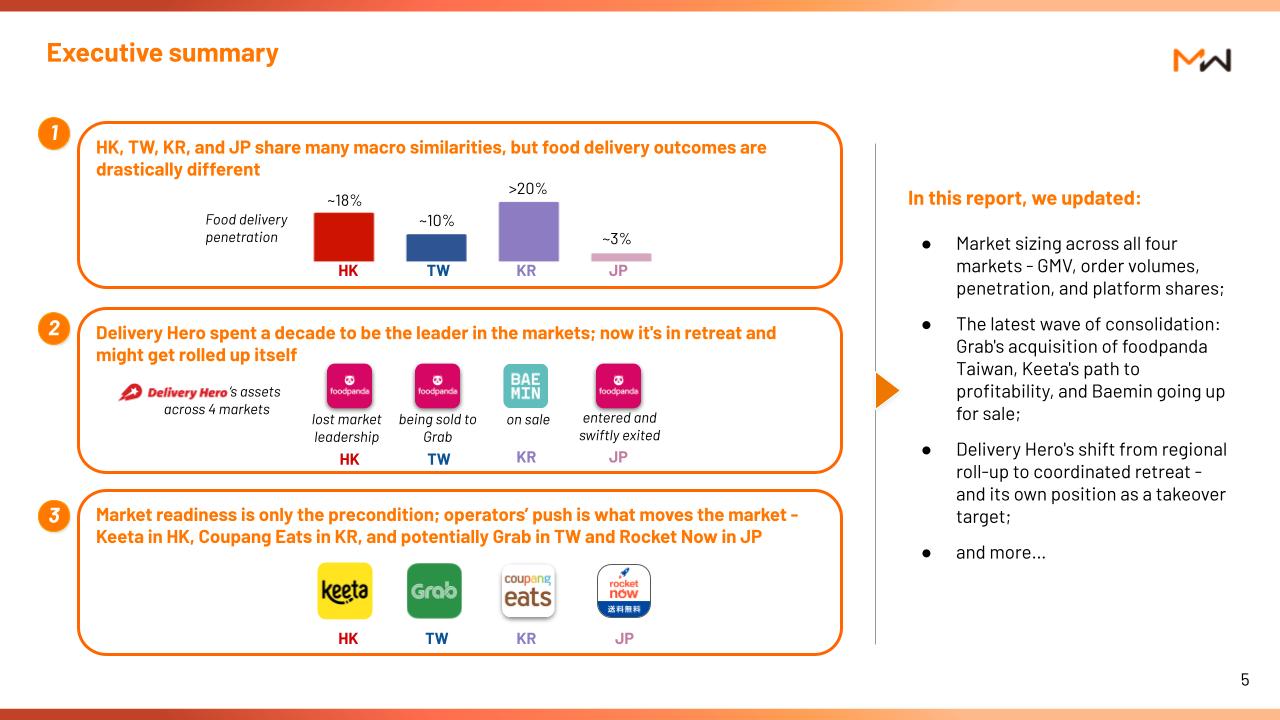
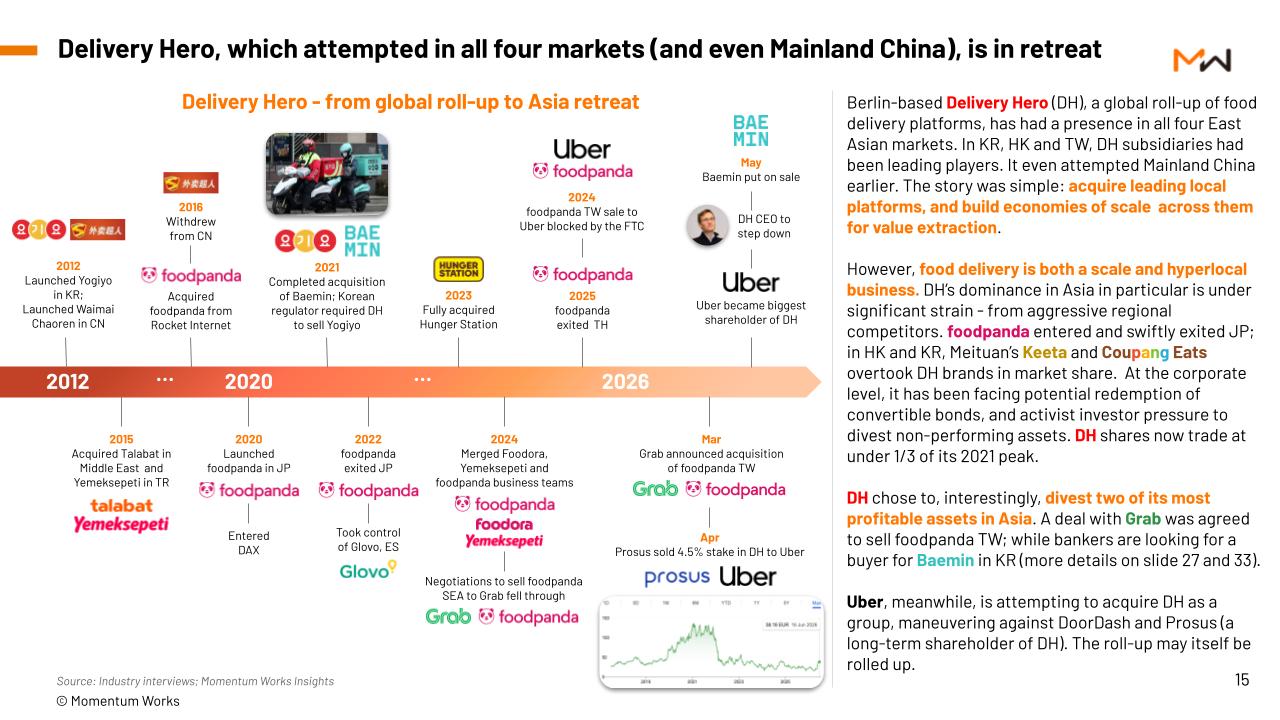
Delivery Hero spent more than a decade assembling leading food delivery positions across East Asia. Today, much of that portfolio is being unwound.
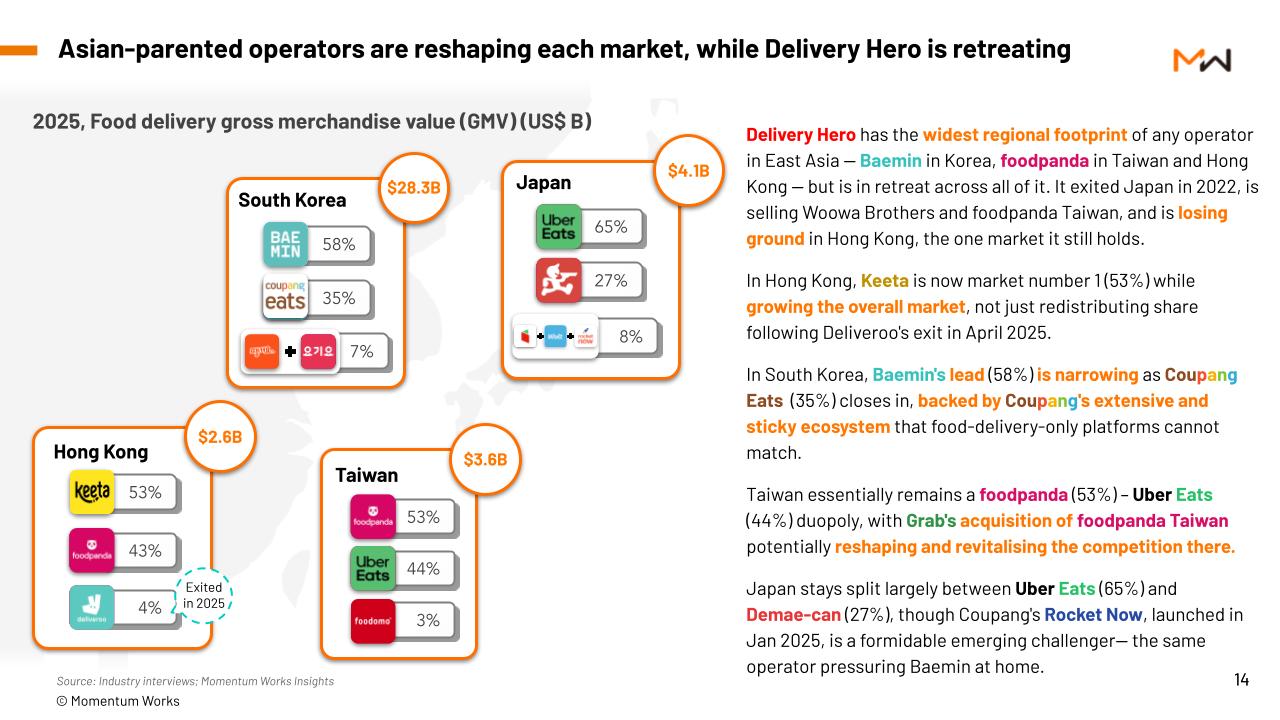
Foodpanda Taiwan is being acquired by Grab, Baemin has been put on sale, foodpanda has lost leadership in Hong Kong, and Japan has already been exited. But this is not just a story of ownership change. It marks a deeper shift in how East Asia’s food delivery markets are being contested.
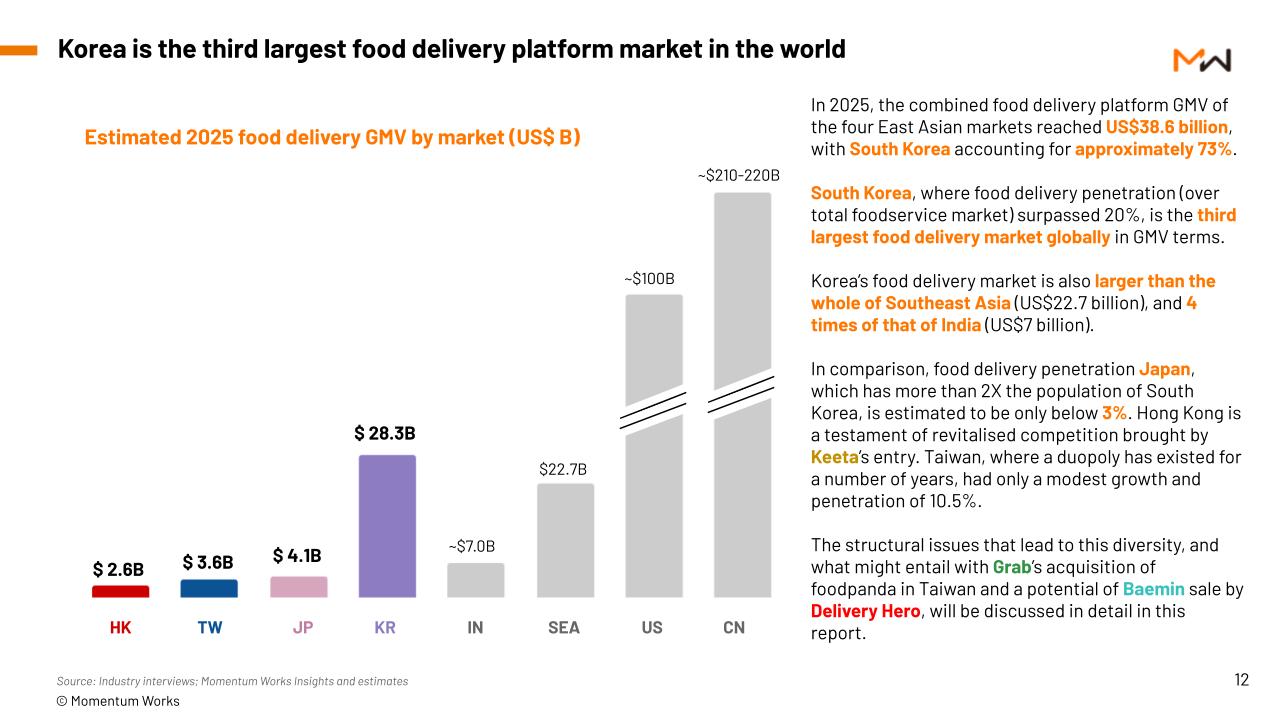
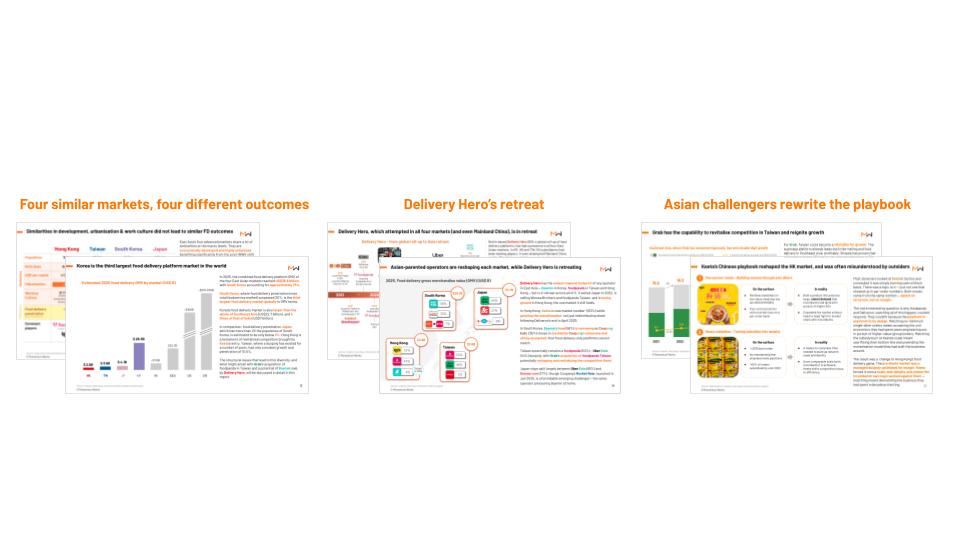
Across Hong Kong, Taiwan, South Korea and Japan, similar market conditions have produced very different outcomes. Together, the four markets generated an estimated US$38.6 billion in platform GMV in 2025, yet penetration ranges from around 3% in Japan to over 20% in South Korea. The difference is not market readiness alone — it is whether an operator has the appetite and capability to push the market.
Food Delivery Platforms in East Asia 2026 is Momentum Works' first report on the food delivery sector outside Southeast Asia – extending our long-running delivery platform series to Hong Kong, Taiwan, South Korea, and Japan. This decision-support report helps leaders understand why similar conditions produced four different outcomes, how competitive dynamics are shifting in each, and what the current reshuffle of ownership means going forward.
Built on Momentum Works' ongoing ecosystem research and operator-level conversations, the report covers market sizing, competitive dynamics, platform strategies, and the cultural and competitive forces shaping food delivery across East Asia.
What this report covers:
- Market sizing for Hong Kong, Taiwan, South Korea and Japan — including GMV, order volumes, penetration and platform shares;
- Why similar market conditions produced sharply different food delivery outcomes;
- Delivery Hero’s retreat from East Asia and what it signals for the old acquisition-led playbook;
- Keeta’s Hong Kong playbook: one-person meals, density building and the shift from subsidy to efficiency;
- Taiwan’s stalled but profitable duopoly, and what Grab’s acquisition of foodpanda could change;
- Coupang Eats’ challenge to Baemin, and why ecosystem players compete differently from delivery-only platforms;
- Japan’s structural barriers — konbini, solo dining and affordable alternatives — and Rocket Now’s live test.
This report is designed for decision-makers including:
- Executives and leadership teams;
- Strategy and regional teams;
- Investors and funds;
- Founders and operators evaluating or active in East Asian markets;
- F&B brands, enablers and logistics players navigating platform dynamics.
How leaders use this report:
- To assess market entry and expansion priorities across East Asia;
- To pressure-test platform, brand and fulfilment strategies against each market's dynamics;
- To benchmark East Asia against SEA and other global delivery markets;
- To align teams around a shared view of where penetration and profit will move next.
Language versions:
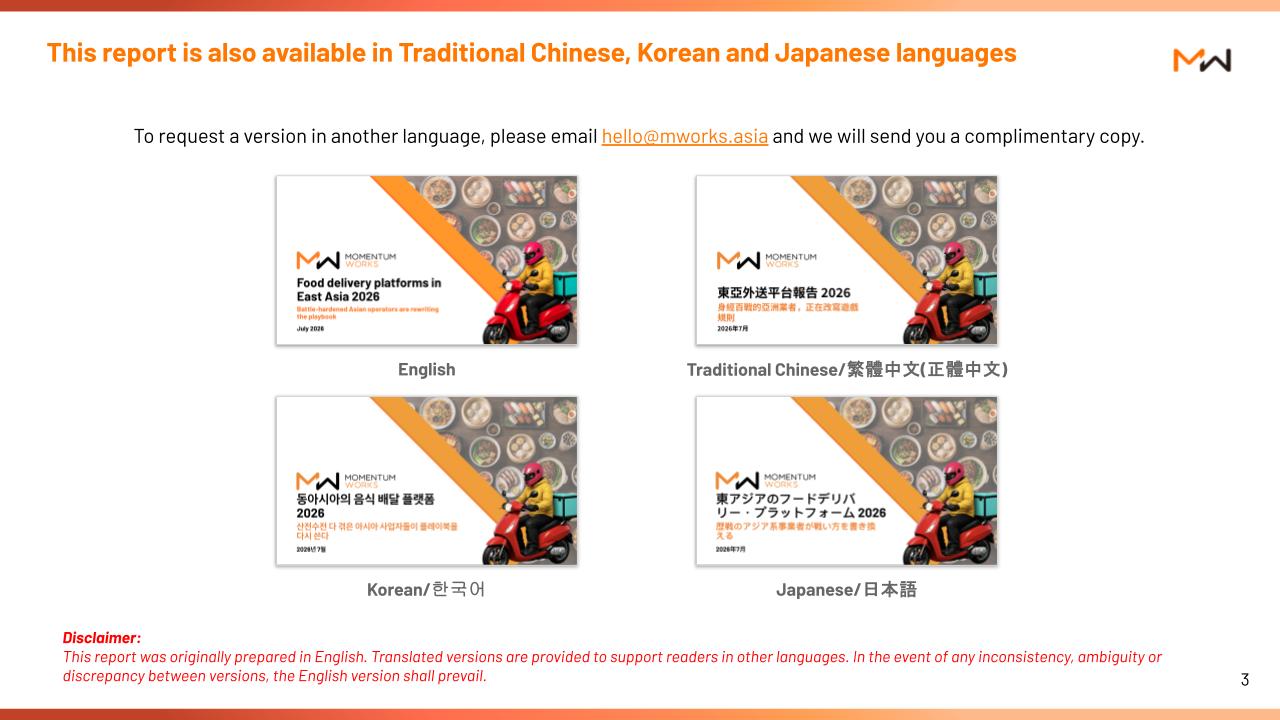
This report is available in English, Traditional Chinese, Korean and Japanese. Purchase of one version includes access to the other language versions. To request another version, please email [email protected].